
Keep your CRM current automatically
Every call, agreed next step, and follow-up task written back to your CRM — so the record stays complete without adding work for your reps.
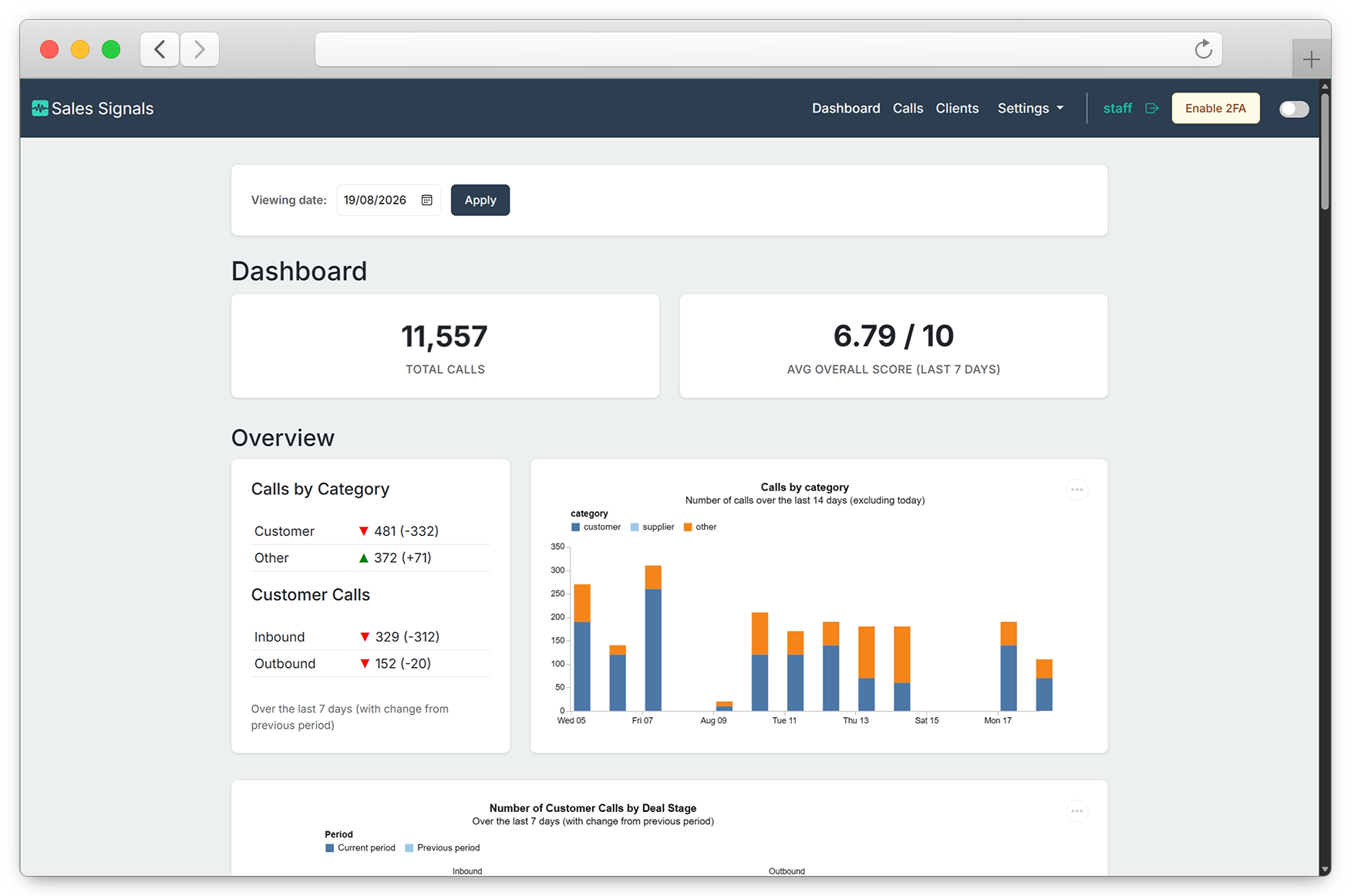
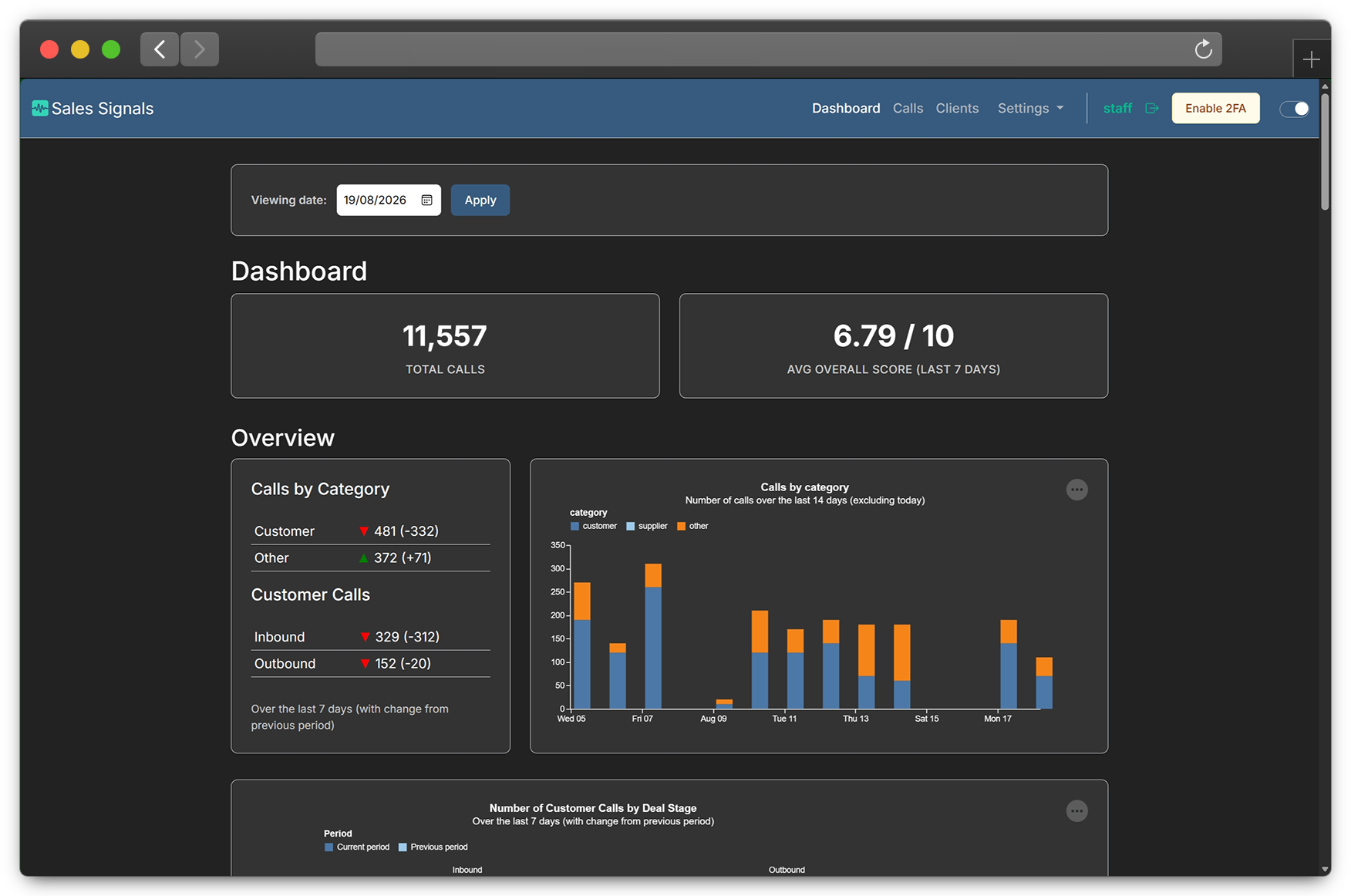
It happened a month ago. The pipeline will not show it for another six weeks.
Twice. Neither call was reviewed.
A third of last week’s, with no next step. Nobody counted.
Not because anyone is careless: because nobody can listen to the hundreds of calls a week.
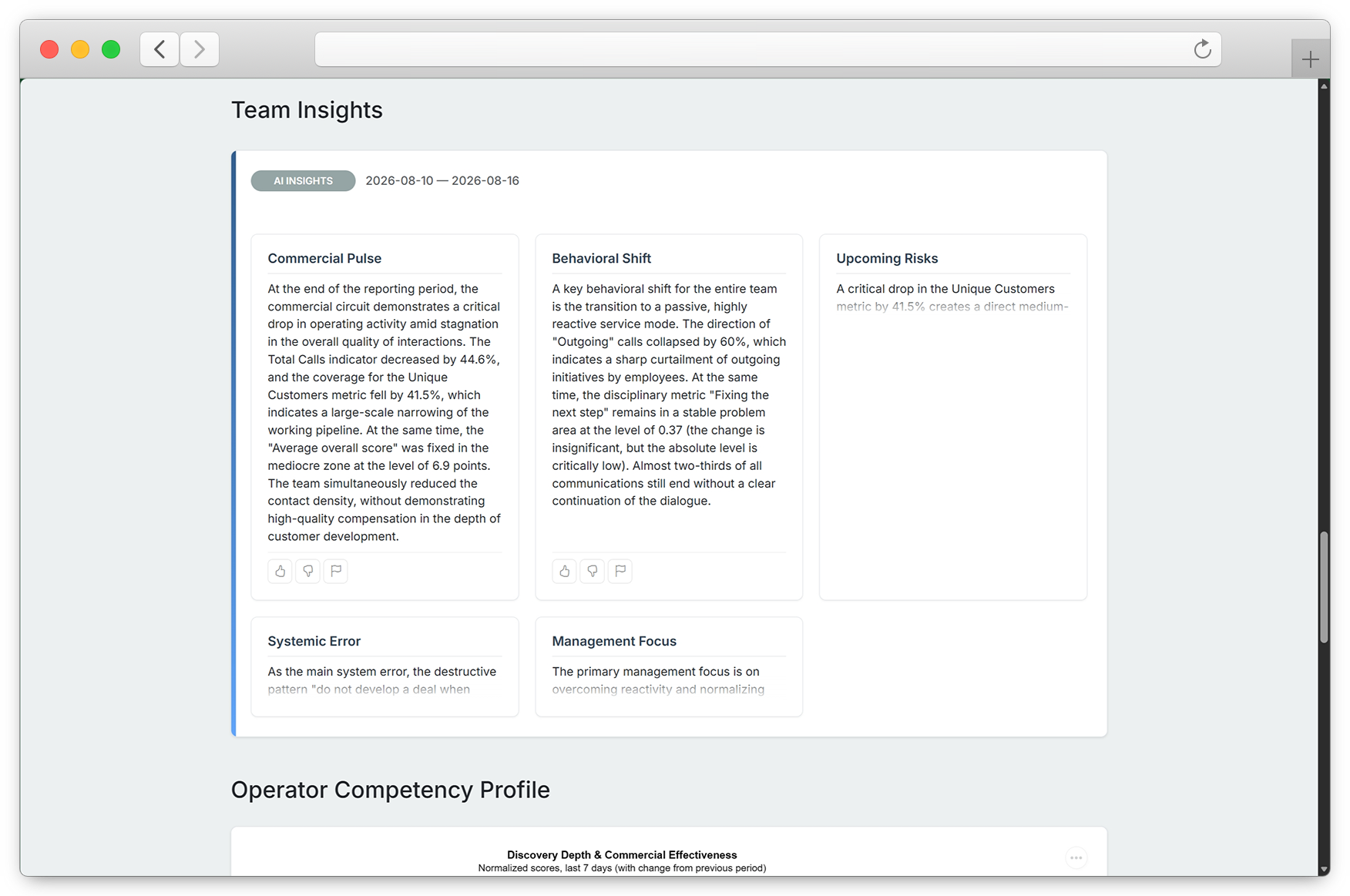
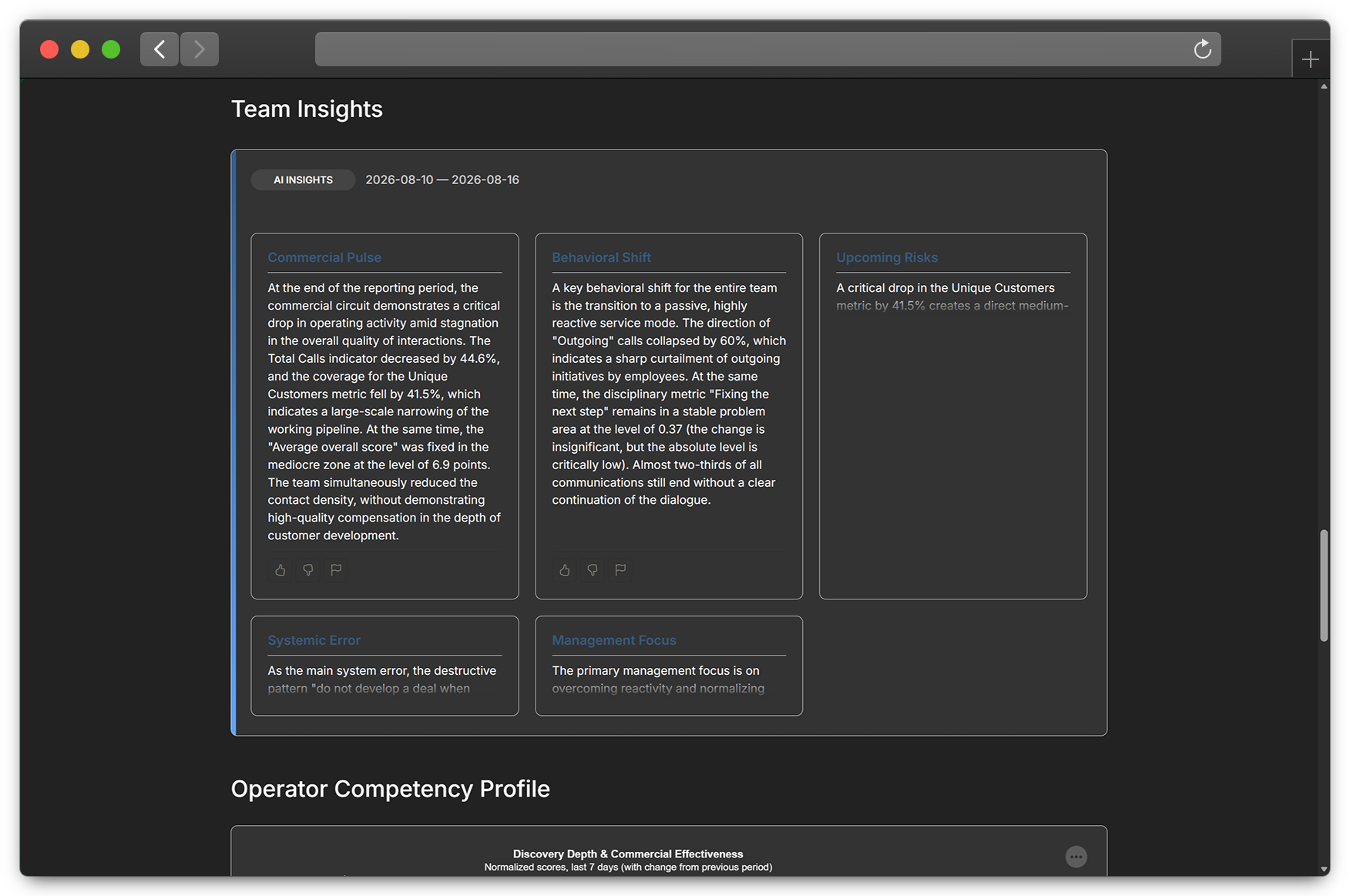
Written weekly, from that week’s calls. The comparison is against the previous seven days, so what you are reading is what changed.
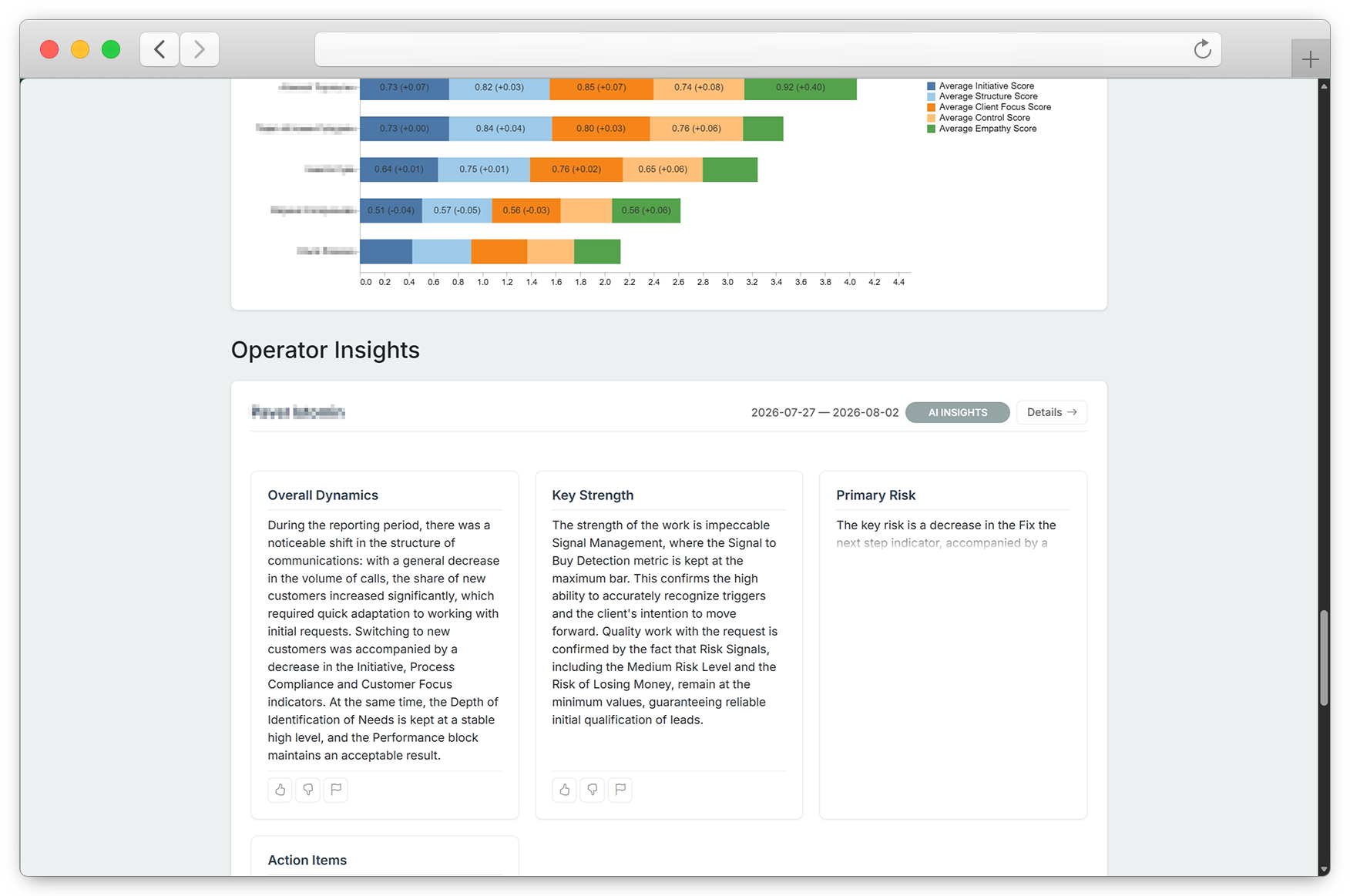
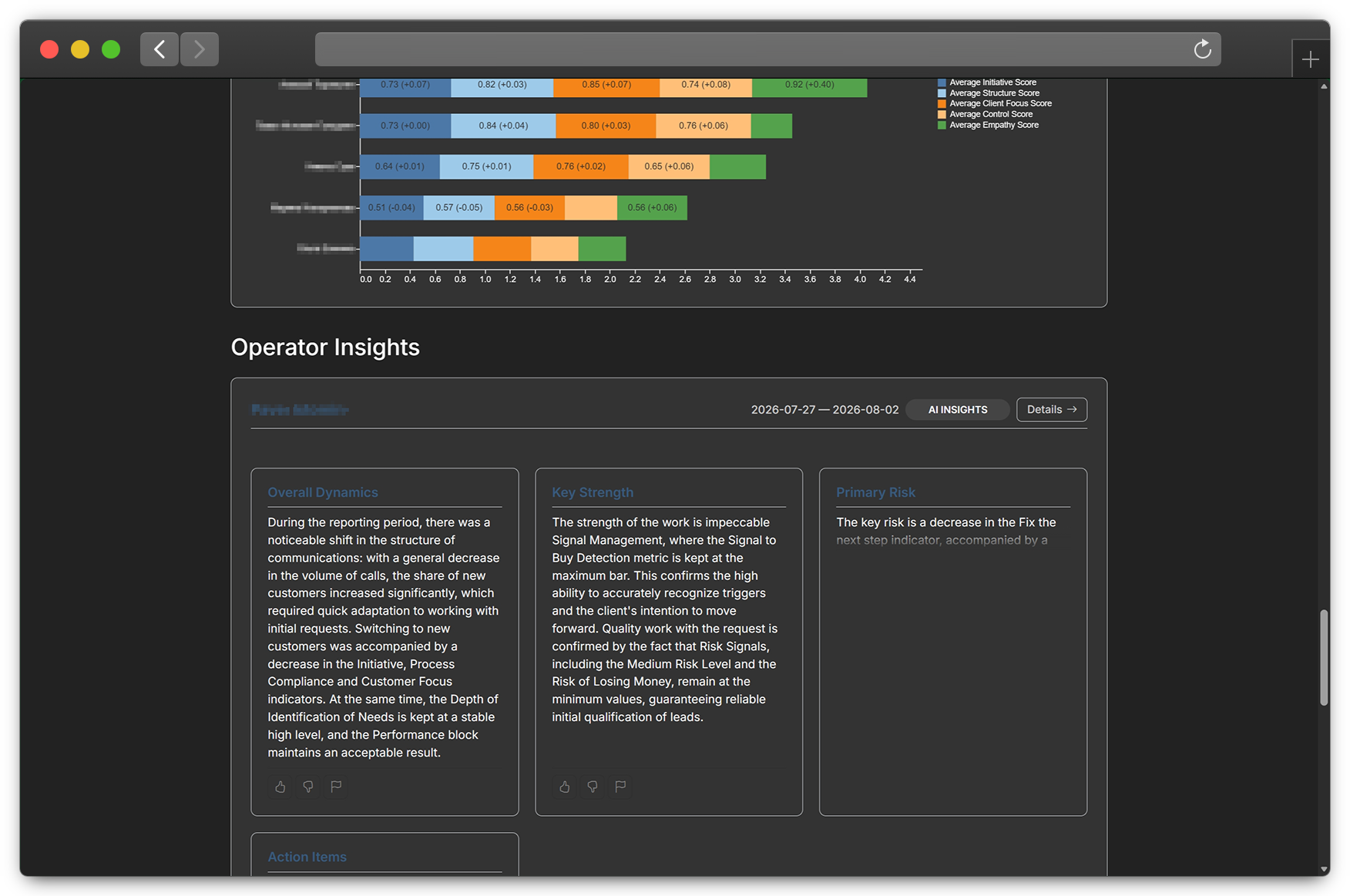
The same measures for every rep, every week, so “is he getting better” has an answer.
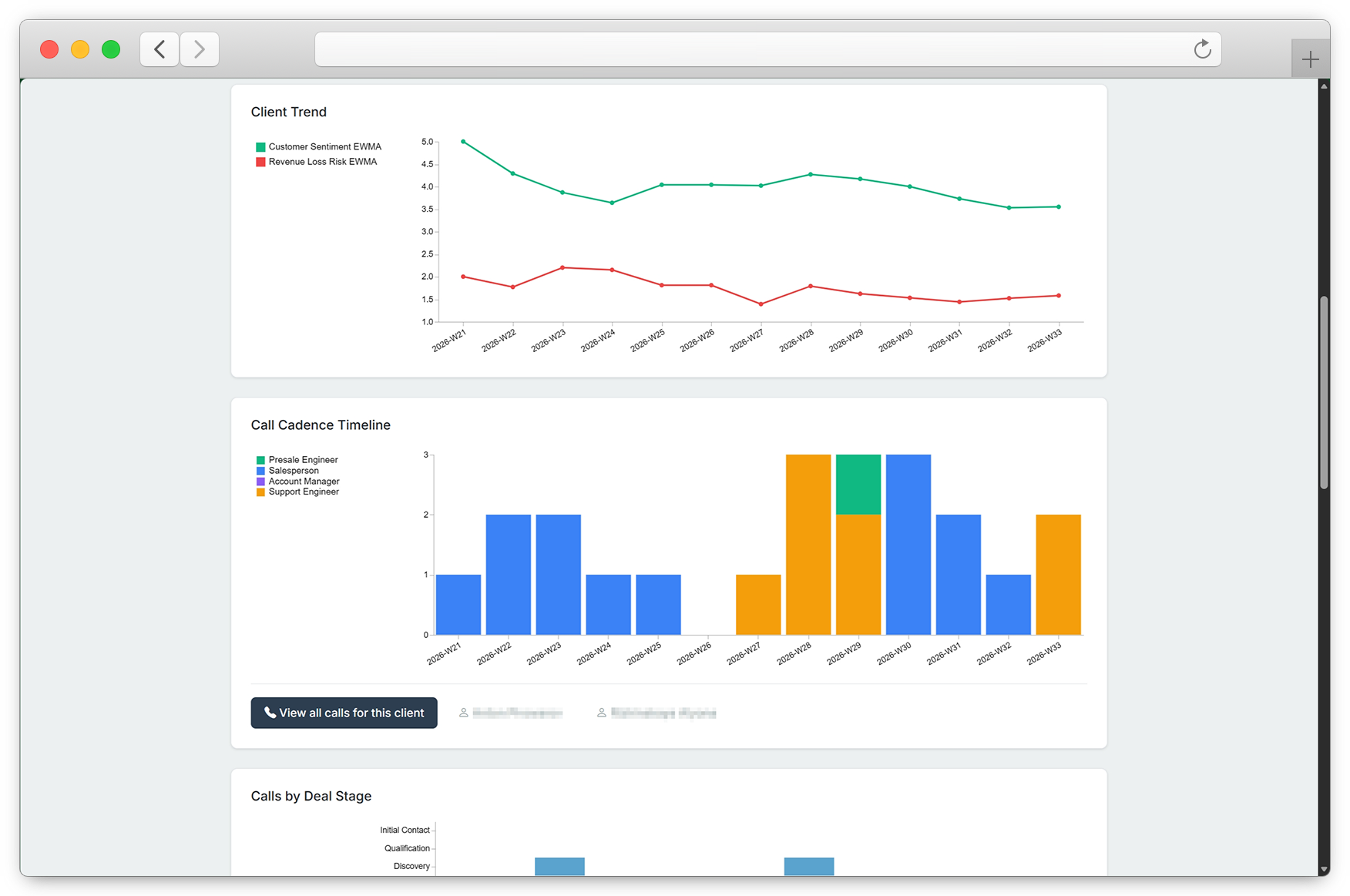
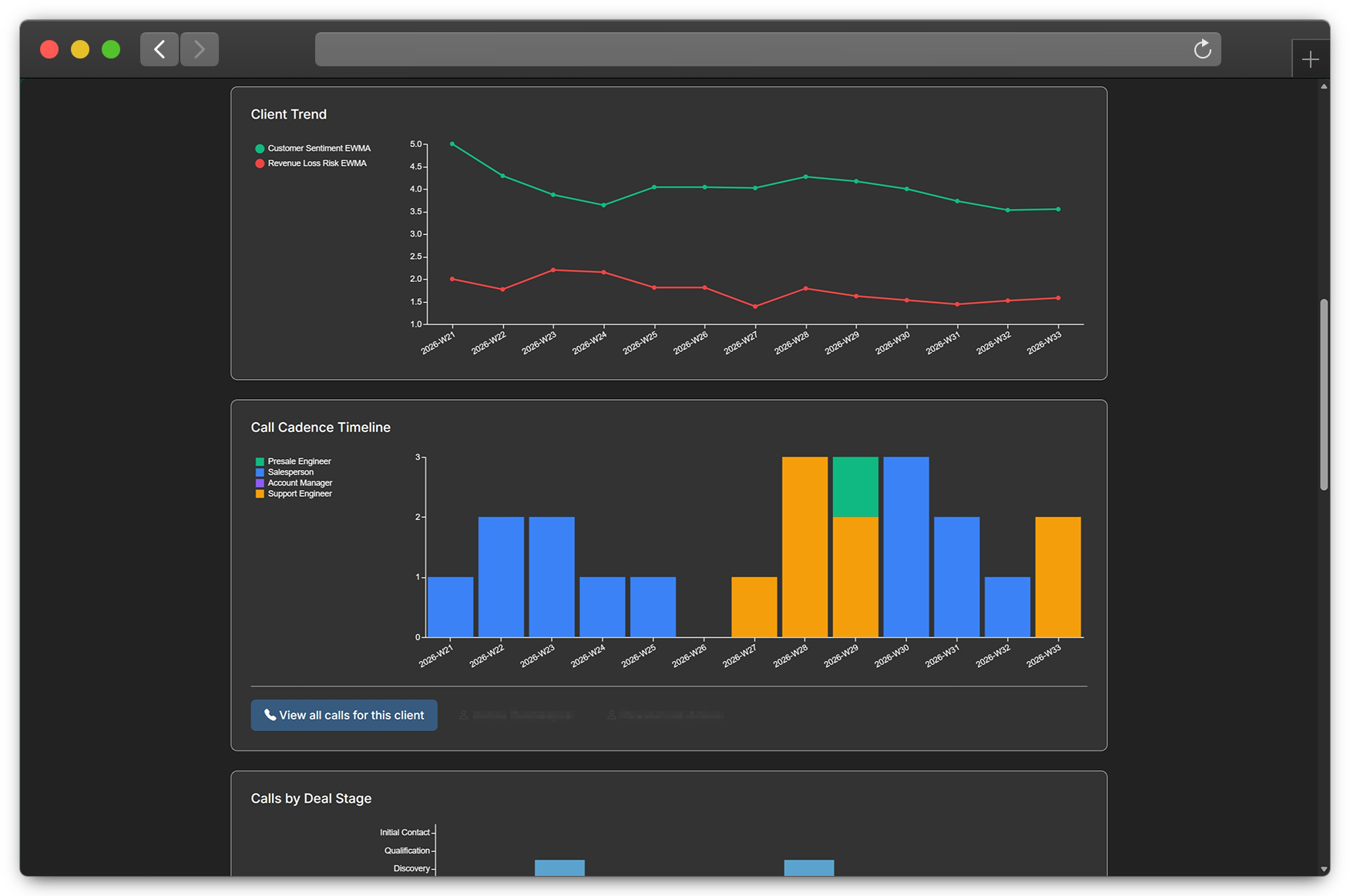
Sentiment on one account, week by week. The line moves before the orders stop.
Connects to your existing phone system and CRM through their APIs. New integrations are quick to add.
Sales Signals is built for businesses where the phone is the sales channel: wholesale, distribution, retail, online stores. Places where call volume is high enough that reviewing calls is impossible and CRM discipline quietly breaks down under load.
It is built for the manager, not the rep. Most call tools are coaching aids handed to individual sellers. This one answers the questions a sales leader actually has: is the team getting better, which accounts are cooling, where is revenue leaking, and is the process being followed at all.
If your team runs a handful of long enterprise deals a year, this is not the right tool for you.
The clearest way to understand Sales Signals is to see what it finds in your team’s actual conversations. We connect it to your existing phone system. There is nothing to install, and nothing changes for your reps.
We’re working with a small number of early customers and are looking for a few more teams to join them. Early customers have a direct influence on what we build next.
Manage a sales team and want it on your own calls? Book a demo


